
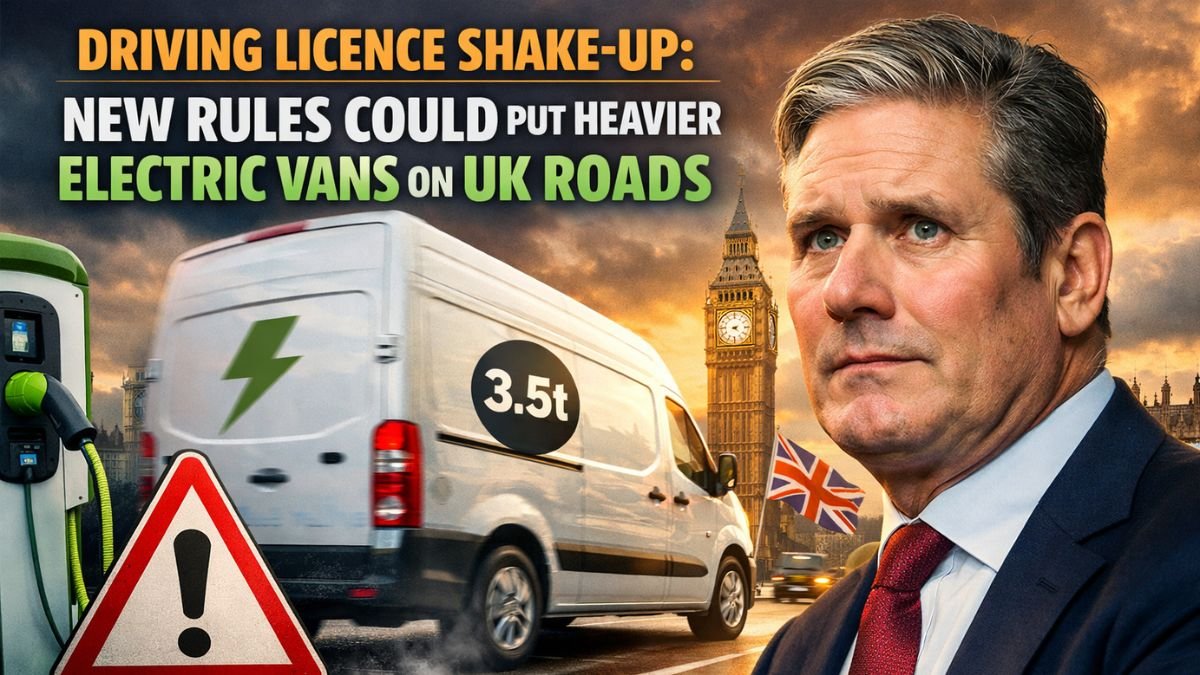
A significant change to driving licence rules could soon transform how electric vehicles are used across the UK.
In Northern Ireland, new proposals aim to allow drivers with a standard licence to operate heavier electric vans, supporting the transition to cleaner transport.
This move is part of wider efforts to meet ambitious net zero targets and accelerate the adoption of zero-emission vehicles.
What Are The Proposed Driving Licence Changes?
The Department for Infrastructure has launched a consultation to review current licence restrictions. At present, drivers with a category B licence—the standard licence held by most motorists—can only drive vehicles weighing up to 3,500kg.
Under the new proposal:
- Category B licence holders could drive electric vans up to 4,250kg
- This includes an additional 750kg allowance to account for heavy batteries
Electric vans are typically heavier than petrol or diesel vehicles due to battery weight, even though they are similar in size and function. This rule change aims to remove barriers preventing wider adoption of electric vans.
Why The Change Is Being Considered
The proposal is closely tied to the UK’s Zero Emission Vehicle (ZEV) mandate, which requires:
- All new petrol and diesel vehicle sales to end by 2035
- At least 24% of vans to be electric by this year
Current licence rules unintentionally restrict the use of electric vans, making it harder for businesses and public services to switch to cleaner alternatives. By relaxing these limits, authorities hope to accelerate the shift toward environmentally friendly transport.
Impact On Drivers And Businesses
If approved, the changes could benefit both individuals and organisations:
For Drivers
- No need to upgrade to a category C or C1 licence
- Avoid costly training, medical checks, and testing requirements
- Easier access to electric van driving
For Businesses
- Simplified fleet transition to electric vehicles
- Reduced operational costs
- Greater flexibility in vehicle choice
Currently, upgrading to a higher licence category can be time-consuming and expensive, which discourages many drivers from switching to electric vans.
Additional Proposals Under Review
The consultation also explores further flexibility in certain situations:
- Allowing electric vehicles up to 5,000kg if extra weight comes from specialist equipment (e.g., accessibility features for disabled passengers)
- Introducing a requirement for drivers to have at least two years of driving experience
- Deciding whether these rules should apply only to goods transport vehicles
- Considering whether towing trailers should be permitted
- Assessing the need for additional training
These considerations aim to balance flexibility with road safety.
How Northern Ireland Compares To Other Regions
Similar rules already exist in other parts of the UK, where category B licence holders can drive zero-emission vans up to 4,250kg.
In the Republic of Ireland, comparable measures are in place, but with stricter conditions:
- Drivers must hold their licence for at least two years
- Towing trailers is not allowed under the relaxed rules
Northern Ireland’s proposal could align with or adapt these existing frameworks.
Safety Considerations And Research Findings
Safety remains a key concern in the consultation process. However, research from the University of Leeds suggests that heavier electric vehicles are not significantly more dangerous to pedestrians than traditional vehicles.
The findings indicate that increased vehicle weight alone does not necessarily lead to more severe outcomes for vulnerable road users, providing reassurance as policymakers consider the changes.
The proposed driving licence changes represent a major step toward supporting the UK’s transition to electric vehicles.
By allowing standard licence holders to drive heavier electric vans, the government aims to remove barriers that currently slow adoption.
While safety and training requirements are still under review, the changes could make electric transport more accessible and practical for both individuals and businesses.
As the consultation progresses, feedback from stakeholders will play a crucial role in shaping the final decision.
FAQs
1. What is the current weight limit for category B licence holders?
Drivers can currently operate vehicles weighing up to 3,500kg with a standard category B licence.
2. What is the proposed new weight limit for electric vans?
The proposal would increase the limit to 4,250kg for electric vans to account for battery weight.
3. Will drivers need extra training under the new rules?
This is still under review, and the consultation is seeking feedback on whether additional training should be required.